-
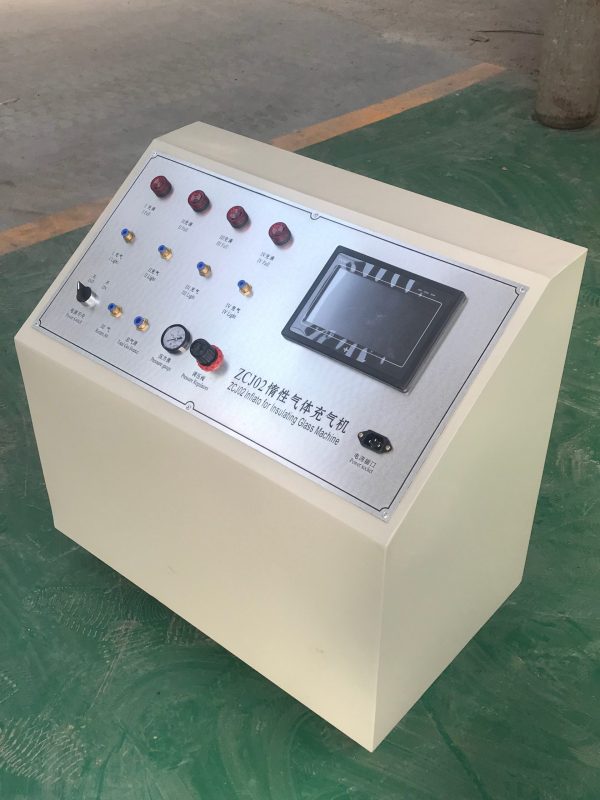
The argon gas filler for insulated glass is mainly used to fill insulated glass with argon after the structural sealant of the insulated glass has cured. Argon is an inert gas with a stable molecular structure. Filling insulated glass with argon can effectively extend the service life of the glass. After inflation, the pressure difference between the inside and outside is reduced to maintain pressure balance, preventing glass breakage caused by pressure difference. It also improves the thermal insulation and sound insulation performance of insulated glass.
Technical Parameters
Voltage: 220V 50Hz Power: 0.1kW Air Pressure: 0.1–5MPa (adjustable) Equipment Dimensions: 700×439×700mm Frequency: 50Hz Weight: 23kg
-
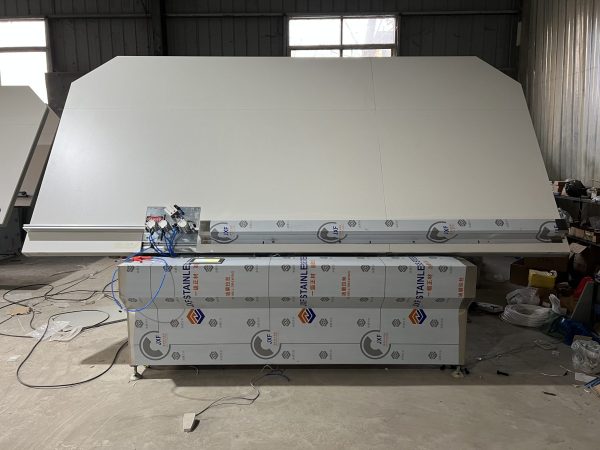
This aluminum spacer bar bending machine is specially designed for rectangular bending of insulating‑glass aluminum spacers. It delivers excellent bending quality, minor dimensional tolerance, simple operation, high efficiency and reliable stability. It is essential production equipment for mass‑production of bent aluminum spacers.
Main Performance Features
- Schneider PLC control with touch‑screen HMI; high automation level and easy operation.
- Servo control for feeding and bending movements.
- Material rack can store two different specifications of aluminum spacers.
- Automatically bypasses joints and arc sections of aluminum spacers during bending and cutting.
- Supports bending of up to fifteen different shapes.
- Manual mode facilitates commissioning and maintenance.
- Special bending reference design prevents longitudinal bow (arching deformation) of spacers.
- High‑efficiency cutting with high precision and smooth cutting surface.
- Belt transmission avoids step‑loss and slipping for high conveying accuracy.
- Unified docking reference for easy adjustment.
- Front‑rear position of feeding reference is reliably kept at consistent position.
- Adopts Schneider control system for outstanding stability.
- Optional laser marking function.
- Equipped with label printer to print processing data in real‑time; editable user name on labels.
- File‑editing interface displays aluminum spacer specifications and calculates total material consumption length.
- U‑enable and laser‑enable functions are selectable.
- Laser‑marking hardware is pre‑reserved; laser module can be added later for customers who do not select it initially.
- Laser marking can be assigned to selected sides; one or two marks can be printed on a single side.
- Support shaft added under bending station to provide supporting force during bending.
- Solves corner‑sealing difficulties for key‑insert insulating glass; straight‑section plug‑in connection improves structural integrity and sealing performance.
- Precise positioning for aluminum spacers; no tool change required, accurate dimension and high production efficiency.
- Compatible with both domestic and imported bending‑grade aluminum spacers.
- Bending time and bending speed adjustable according to aluminum‑frame size for optimized production efficiency.
- Built‑in dimension‑compensation system offsets dimensional deviation caused by cutting saw blades.
-
Product Overview
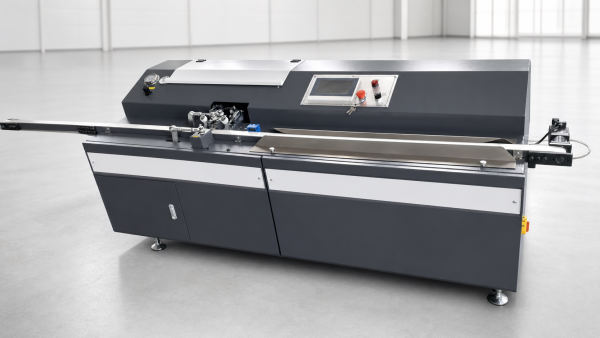
The butyl sealant extruder applies a continuous primary seal to both sides of an insulating-glass spacer frame. The primary butyl barrier is a critical part of the edge-seal system because it limits moisture-vapor and gas transmission. The machine heats and delivers butyl sealant through controlled nozzles while the spacer frame is guided through the application area. Available references range from basic equipment to automatic and imported configurations.
Key Benefits and Features
• Controlled heating supports stable butyl viscosity during production.
• Guiding and nozzle mechanisms apply sealant to both sides of the spacer.
• Automatic configurations improve repeatability and reduce operator adjustment.
• Pressure gauges and operator controls provide visible process feedback.
• Long machine bed supports spacer-frame handling through the application area.
• Different model levels allow selection according to output, automation and budget.
-
Product Overview
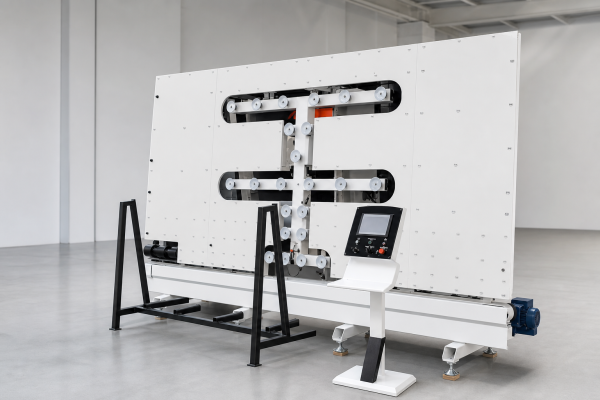
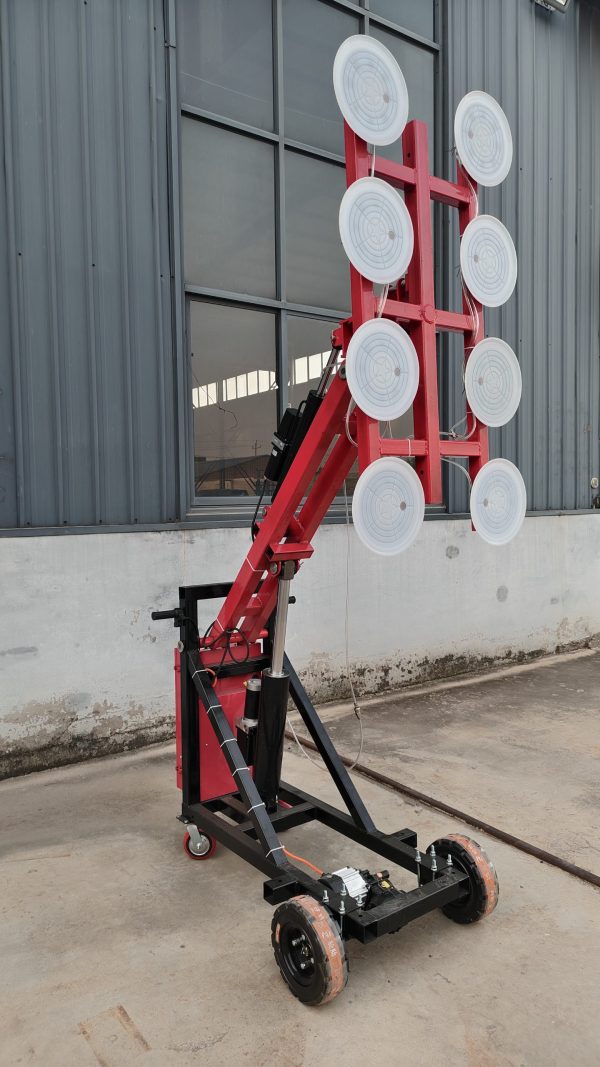
The automatic glass loading and unloading system is intended to transfer glass between storage, conveying and processing positions with less manual handling. The equipment uses a controlled mechanical structure, suction handling and programmable movement to improve production continuity. It is suitable for insulating glass lines and other vertical glass-processing applications where repeatable sheet transfer, reduced labor demand and safer handling are priorities.
Key Benefits and Features
• Automated sheet transfer reduces repetitive manual lifting and contact with glass edges.
• Programmable movement supports repeatable positioning and line coordination.
• Multiple model references allow selection according to the required glass-size range.
• A Xinje control configuration is referenced, with Siemens available as an upgrade.
• Suction handling should be configured for the buyer’s maximum sheet dimensions, thickness and weight.
• The system can be planned as a loader, unloader or coordinated line-handling solution.
-
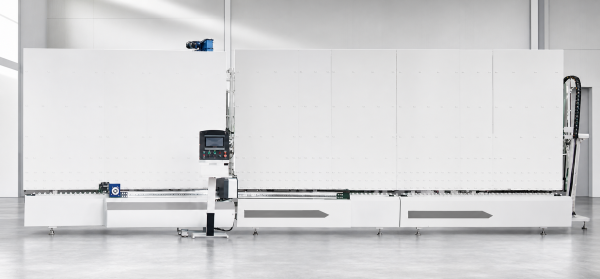
Product Overview
The automatic insulating glass sealing line applies the secondary perimeter seal around assembled insulating glass units. It is designed for stable conveying, accurate glass positioning and controlled sealant application. The supplied technical document describes a three-section arrangement with glass buffering, V-belt transmission, vacuum positioning and precision motion control. One or two sealant supply systems may be used according to production requirements.
Key Benefits and Features
• One or two sealant supply systems can be selected and switched according to production needs.
• V-belt conveying helps prevent sticking, keeps the glass edge clean and supports stable positioning.
• Embedded back-support wheels improve stability while the glass moves through the line.
• The third section can buffer glass to improve production continuity.
• Vacuum positioning holds and locates the glass during the sealing process.
• Precision screw-driven motion supports accurate sealant-head positioning and controlled corner movement.
• Hydraulic stabilization assists controlled movement, force and speed.
• Referenced component choices include Yaskawa or Inovance servo systems and Schneider electrical components.
-
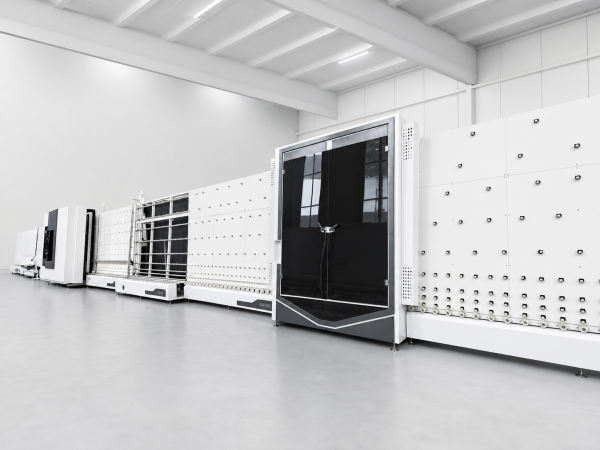
Product Overview
The complete insulating glass production line integrates the principal stages required before secondary sealing: vertical conveying, glass washing and drying, inspection, spacer-frame positioning, assembly, pressing and optional gas filling. The available model references cover different nominal working-height classes. Final line configuration should be selected from the buyer’s maximum glass size, daily output, insulating-glass structure, factory layout, utility conditions and required automation level.
Key Benefits and Features
• Integrated sections reduce repeated handling between washing, inspection, assembly and pressing.
• Dual air knives and fans support glass drying before assembly.
• PLC and servo control coordinate conveying and positioning.
• Remote-control capability is referenced for diagnostics and support.
• Hydraulic control supports controlled pressing operation.
• Optional gas filling, servo beam lifting and unequal-pane handling expand the product range.
• Coated-glass detection can be added where required.
• Large models may use reinforced or enlarged frames and additional conveying or pressing sections.
-
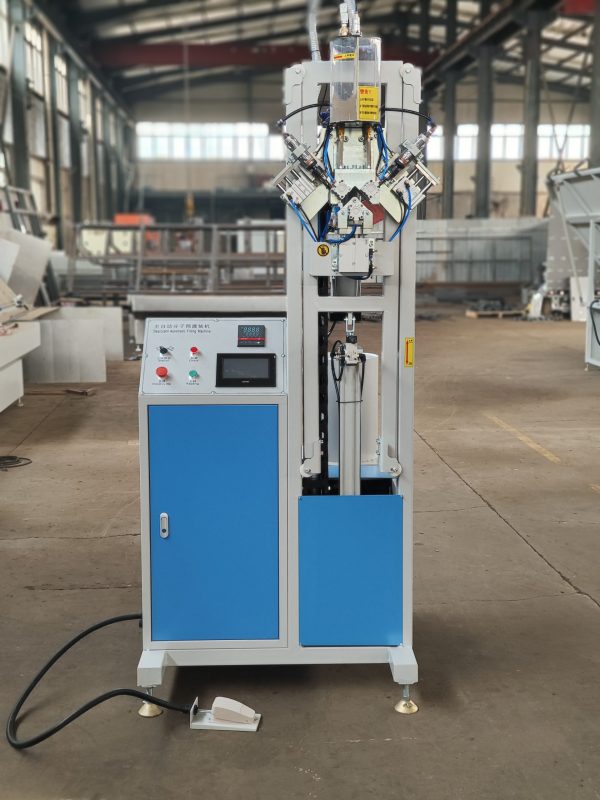
Fully‑Automatic Molecular Sieve Filling Machine
The fully‑automatic molecular sieve filling machine is designed for bent aluminum frames. It quantitatively fills moisture‑proof molecular sieve desiccant pellets. The machine automatically completes back‑side drilling and desiccant filling for pre‑bent aluminum frames. It features high filling efficiency, simple operation, reliable stability and adjustable filling volume.
- PLC program control; positioning, back‑side drilling, filling and glue‑sealing are fully automated for high productivity.
- Enlarged material tank with double‑layer sealing supports multiple refills and maintains long‑lasting sealing performance.
- Built‑in butyl glue cylinder with automatic heating for automatic hole‑sealing.
- Filling height is adjustable according to aluminum frame dimensions.
- Automatic replenishing device for molecular sieve; both auto‑refilling and manual feeding are available.
- Filling volume for long sides and short sides can be controlled separately by adjusting filling time.
- Transparent molecular sieve storage tank allows direct visual check of remaining material level.
- Dual‑rod lifting structure for filling heads ensures smooth vertical movement.
Technical Parameters
表格
| Power Supply |
220V 50 Hz |
| Installed Power Capacity |
1.3 kW |
| Air Source Requirement |
0.5‑0.8 MPa, 50 L |
| Min. Size of Fillable Aluminum Frame |
200×200 mm |
| Max. Size of Fillable Aluminum Frame |
2000×3000 mm |
| Filling Speed |
5‑10 seconds per piece (1×1 m, 9A spacer) |
| Molecular Sieve Particle Diameter |
0.5‑1.0 mm |
| Machine Weight |
450 kg |
| Overall Dimensions |
950×1000×2900 mm |
-

-
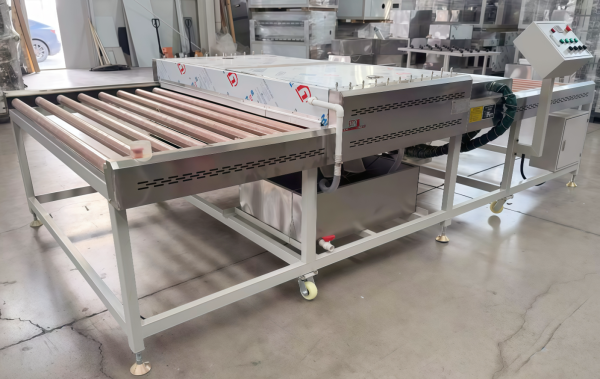
glass washing machine is used for cleaning and drying insulated glass, sliding door glass, tempered glass, lenses, and cabinet door glass products. Its speed is adjustable, and it uses a cleaning and suction roller to remove most of the water. After heating and air drying, the moisture on the glass is removed, leaving the glass…
-
-
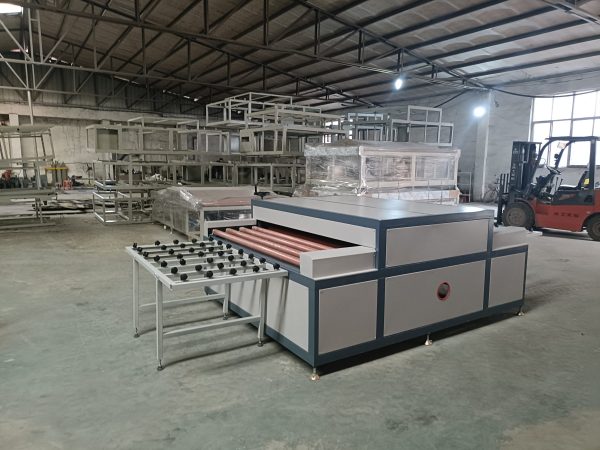
The horizontal insulated glass hot‑press laminating machine is special processing equipment for insulated glass production. It performs hot‑press lamination for multiple materials including composite spacer tape, glued aluminum spacers and warm‑edge spacers. When the heating system is turned off, the machine can also function as a cold press.
Equipped with an integral lifting system, the machine adjusts the gap between upper and lower rollers according to different glass thicknesses as well as the thickness of aluminum spacers, spacer tapes and warm‑edge spacers, to meet processing requirements for insulated glass of various thicknesses.
-
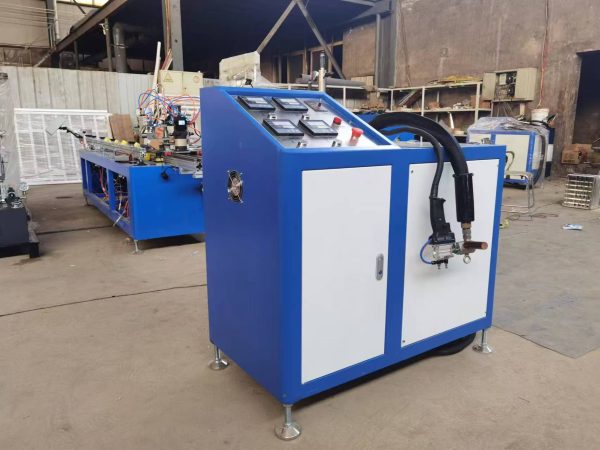
Hot Melt Butyl Sealant Extruder (Hot Melt Glue Dispenser)
This hot melt butyl sealant extruder is special equipment for insulated glass production, used for applying butyl hot melt sealant on aluminum spacers and warm-edge spacers. It is the key equipment for the first sealing of insulated glass.
The machine adopts four independent temperature control zones: glue box heating, pump heating, rubber hose heating and glue gun heating. Each temperature can be digitally set and monitored separately to ensure stable melting and good fluidity of butyl glue. It is equipped with output quantity adjustment function, emergency stop button and power indicator for safe and convenient operation.
Main Features
- Four independent digital temperature controllers for glue box, pump, hose and glue gun; precise temperature control to prevent glue scorching or poor melting.
- Adjustable glue output volume, stable and uniform glue bead, easy to adjust glue width and thickness.
- Humanized control panel with power indicator and emergency stop button for high operation safety.
- Compact overall structure, easy movement and installation, small floor space.
- Stable extrusion pressure, continuous glue feeding, high working efficiency.
- Suitable for butyl hot melt sealant for insulated glass primary sealing.
Technical Parameters
Power Supply: 220V / 380V, 50Hz Total Heating Power: 5.5kW Glue Output Rate: 0~2 kg/min Max. Extrusion Pressure: 12–18 MPa Glue Tank Capacity: 29 kg Overall Dimension: 640×720×1050 mm Weight: About 260 kg
Application
Widely used in insulated glass processing factories for coating butyl hot melt adhesive on aluminum spacer bars and warm edge spacers to complete the primary sealing of double glazing units.
-
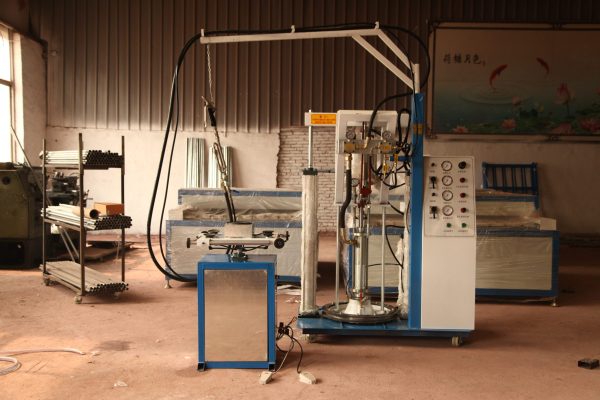
two‑component glue dispenser is a latest‑model fully‑pneumatic two‑component gluing machine. It is special‑purpose gluing equipment for manufacturing insulated glass and curtain‑wall glass. It completes mixing and application of Component A and Component B for secondary sealing in one single operation. Featuring labor savings, high efficiency, small footprint and competitive price, this reliable equipment is ideal for processing insulated and curtain‑wall glass.
Main Performance Features
- The frame adopts integral welding. Two motor options are available: domestic fully‑pneumatic motor and imported Korean HASCO brand motor. The machine operates with only one air pipe. The gantry frame plus welded triangular structure eliminates swinging during cantilever‑beam operation.
- Newly‑built internal air reservoir ensures more stable pressure.
- The B‑pump features double‑column design and double‑seal pressure plate, which thoroughly solves oxidation and leakage issues of the black‑component sealant.
Technical Parameters
Model: STJ06T Two‑Component Glue Dispenser Mixing Ratio: 6:1‑14:1 (adjustable) Base Material Drum: 55 gallon (200 L) Curing Agent Drum: 5 gallon (20 L) Maximum Air Consumption: 1.03 m³ Maximum Dispensing Working Pressure: 20 MPa Overall Dimensions: 1300×950×1800 mm Total Machine Weight: 460 kg
-
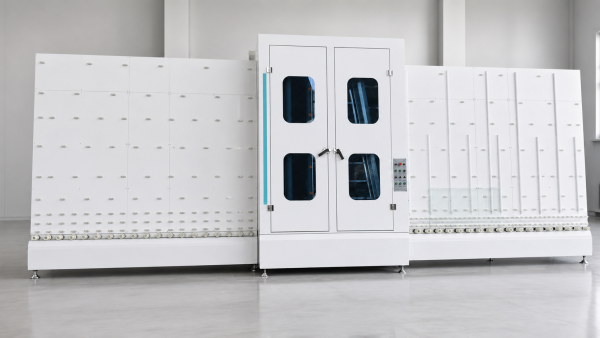
Product Overview
The vertical glass washing and drying machine is designed to clean flat glass before inspection, spacer positioning, assembly and pressing. It combines vertical conveying, washing, rinsing and air drying in a compact production flow. The machine is suitable for insulating glass factories, architectural glass processors, window manufacturers and production lines that require stable surface cleanliness before sealing. The vertical layout reduces floor occupation and supports connection with upstream and downstream equipment.
Key Benefits and Features
• Vertical transmission supports convenient line integration and controlled glass movement.
• Washing, rinsing and drying are organized as a continuous preparation process.
• Optional dual air-knife and fan arrangement can improve drying capability for demanding production.
• Optional stainless-steel water filtration and high-pressure pump filtration support improved water management.
• A movable air knife and low-noise fan can be selected according to product mix and workshop requirements.
• Frame extension or reinforcement should be matched to glass height and actual load.
End of content
End of content